
Water storage for marine sites: keep your supply close to where it is used.
MONAWA offers modular and submerged tanks for storage needs at marine sites. To help you choose, tell us the type of water to be stored, its intended use, the available space and where it will be used.
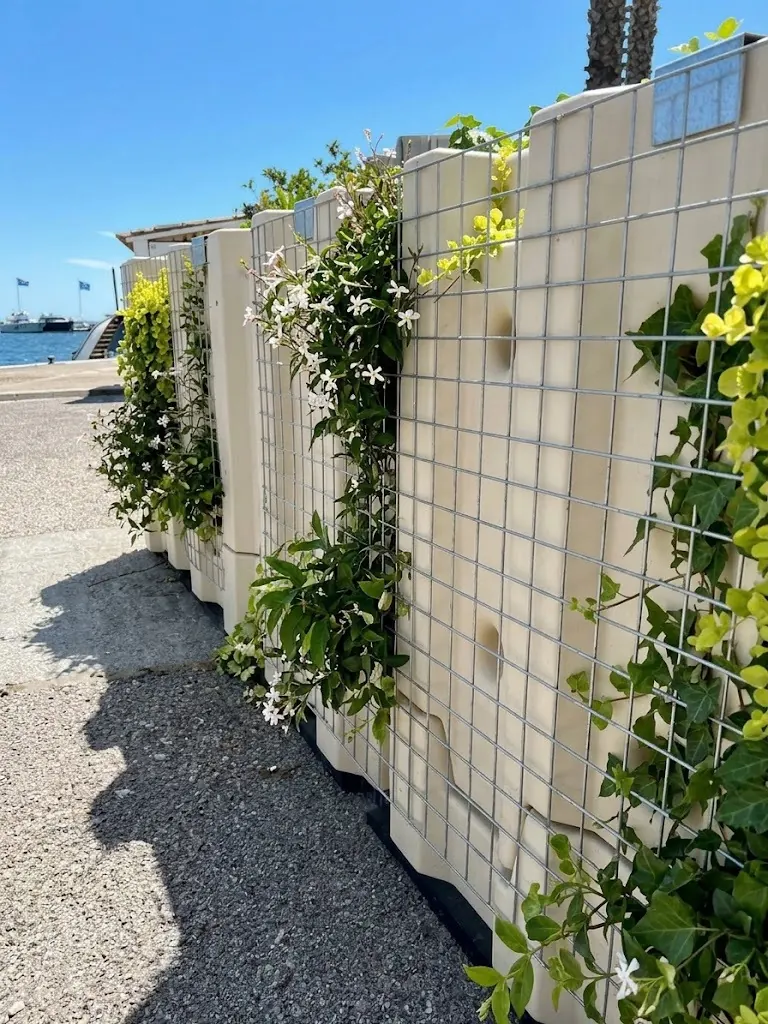
- Modular tanks
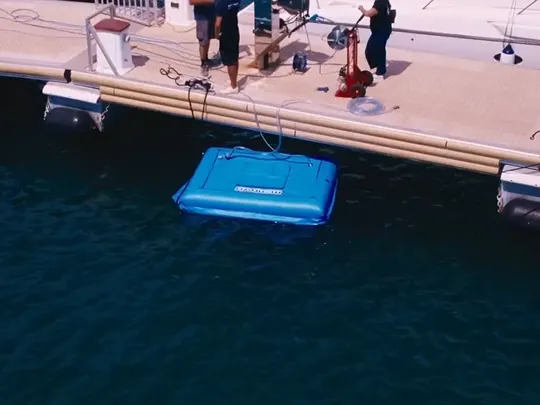
- Submerged tanks
- Storage and distribution

Match storage to your operating patterns.
Storing water separates supply from use. At a marina or boat washdown area, demand may peak during washing or when activities end. Planning therefore needs to consider filling patterns, consumption points and how the amount of water in storage will be monitored.
Start by defining what the tank will hold. Water for rinsing, water for drinking or food use, and wastewater cannot be managed interchangeably. The choice of materials, connections and procedures depends on that intended use.
Configure modular storage to fit the available space.
Positioning the modules
Modular storage allows the layout to be designed around the constraints of the site. The project must consider the available footprint, access around the modules and routes to work areas. An empty space on a plan is not necessarily a workable location if maintenance becomes difficult.
Access and sizing
Before choosing a configuration, describe the supporting surface, access routes and existing obstacles. Plan access to connections and inspection points too. The modular tank page presents the product; sizing must reflect the usable reserve required and your daily operations.
Assess a submerged tank in its harbour setting.
Use of water space
A submerged tank offers another option where land-based storage is restricted. It requires an assessment of the water space it occupies, its movement and the access needed. Review its integration with the site manager, identifying activities in the basin and routes that must remain clear.
Installation and monitoring
The product page for the submerged tank introduces this range. Siting conditions, securing the unit and connection routes require a tailored assessment. Planning must also cover how to monitor and maintain the equipment without disrupting surrounding activities.
Discover storage solutions on land or afloat.
- 05
- 06

Connect storage to supply and distribution.
Supply
Integrate storage into the water system, from its source to the points of use. Its supply, the points it serves and transfer conditions must be understood. If local production is being considered, the desalination page helps place the tank in the overall system. An existing supply should be described just as precisely.
Level monitoring
Level management and filling conditions should be addressed during project assessment. Specify who operates the tank, who identifies a shortage and who checks the connections. A straightforward operating set-up makes monitoring easier, particularly where several teams share an installation.
Wastewater storage
Wastewater storage follows a different process: receiving effluent, transferring it and removing it to a suitable destination. Do not plan to change the liquid stored without technical approval and an appropriate procedure. Separate circuits and clearly identified uses must remain easy for operators to understand.
Prepare your enquiry with future operation in mind.
Describe your activity and the intended liquid, then the possible locations on land or on the water. Explain consumption patterns over different periods and any access constraints. If you have a layout plan, indicate distances and obstacles to assess, rather than focusing solely on the desired capacity.
The final choice must consider future operation: cleaning, inspection, connection checks and possible changes in use. Seasonal demand and a year-round service may require different arrangements. Ask for maintenance conditions and limits of use to be specified in the proposal.
Your questions, our answers.
Should I choose a tank on land or on the water?
Compare the space actually available, access constraints and operating conditions. The type of liquid and site configuration remain key factors.
Can storage be connected to an Écostation?
This combination can be assessed to coordinate production and use. Connections and the intended role of the reserve must be specified.
Is a tank automatically suitable for drinking water?
No. Drinking and food use must be explicitly assessed, together with materials, storage conditions and project requirements.
Can I plan to expand storage later?
Mention future needs in your enquiry. Options for modification depend on the model, its location and the planned connections.
One drop, three areas of expertise, one group.
 Complementary marine expertiseVisit website
 Onboard services | Collection | Waste managementVisit website
 Prevention | Response | Operational controlVisit website