
Desalination for marinas: produce water to suit your needs.
MONAWA offers Écostations that produce fresh water from seawater for marine use. Marinas, boatyards and professionals can explore fixed or mobile configurations to suit their washing and rinsing needs.
- Reverse osmosis
- Fixed and mobile Écostations
- Washing and rinsing

Connect water production to the site’s daily operations.
Water self-sufficiency starts with a clear picture of how water is used. A boatyard with several work areas, a marina with a service point and a mobile professional organise their supply differently. The time when water is produced must be distinguished from the time when it is used.
List cleaning and rinsing tasks, how they are spread throughout the day and peak activity periods. Specify the water source available on site too. This information helps establish a coherent set-up, rather than sizing a machine solely by its stated capacity. Access and maintenance constraints matter as much as production needs.

Understand reverse osmosis as part of the whole installation.
Fresh water production
Desalination Écostations use reverse osmosis to produce fresh water from seawater. A membrane separates some of the water from the dissolved salts. The project must consider the whole installation: supply, water preparation, production, any storage and management of the concentrated stream.
How the water will be used
The fresh water produced must suit its intended use. The required quality depends on whether it is used for washing, rinsing or drinking and food preparation. If drinking or food use is envisaged, state this explicitly so that the necessary treatment, testing and requirements can be assessed. Connections and discharges must also be reviewed with site managers.
Compare fixed and mobile units to suit your work areas.
Movement and location
A mobile Écostation may be suitable where demand moves between work areas. Equipment routes, parking and preparation before use must then be considered in the project. A fixed Écostation suits a set-up based around a permanent location, with points of use to be defined.
Available configurations
The compact and extended versions suit different configurations. To compare them, describe how operators move around, the sequence of tasks and the space available. The product pages describe the equipment; the quotation brings its capabilities together with your constraints. The boat washdown area solution page looks more closely at boatyard use.
Explore the equipment and its respective functions.
- 02
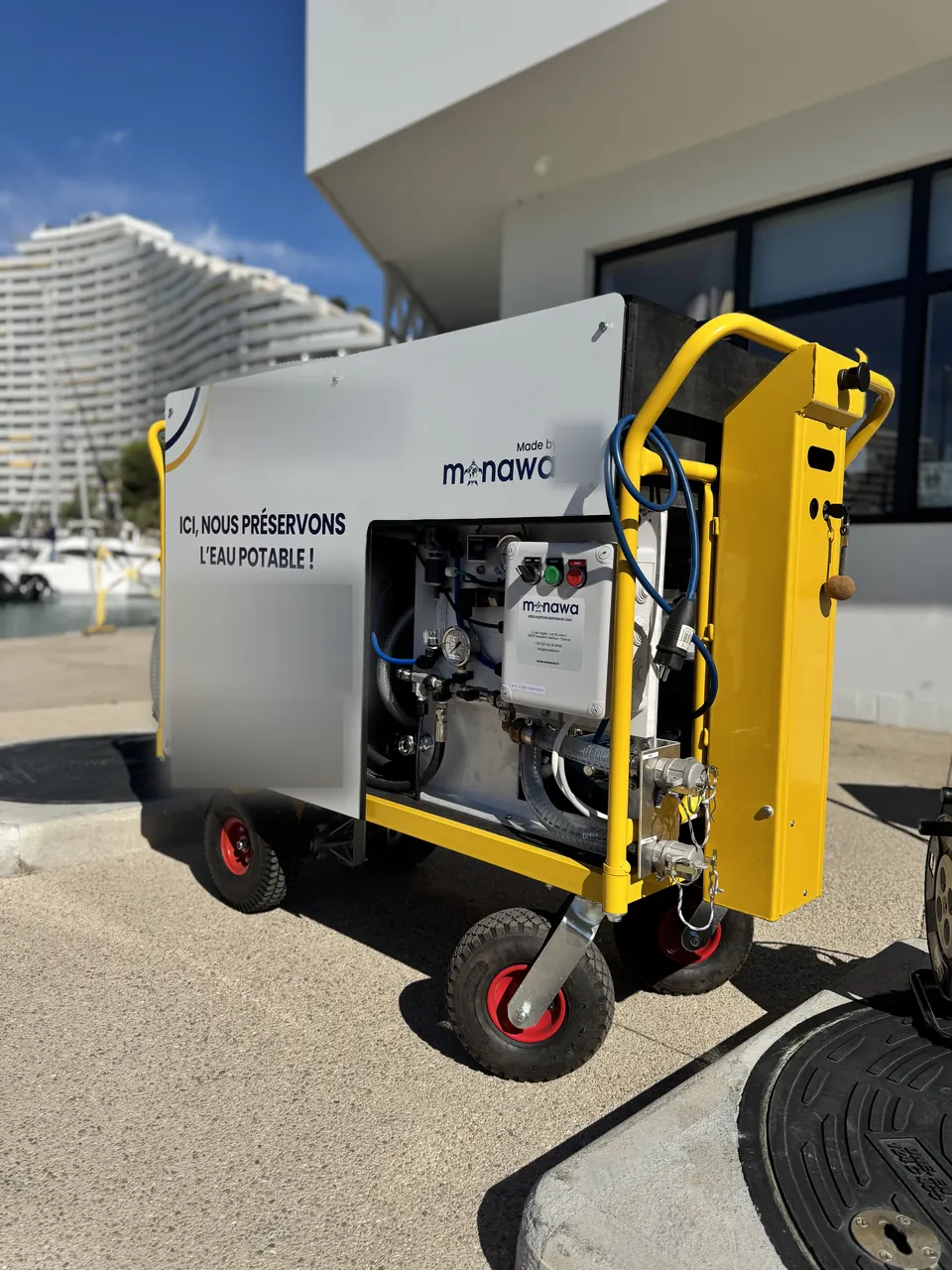
Compact mobile Écostation
To bring water production closer to the tasks carried out on site.
View product details - 03
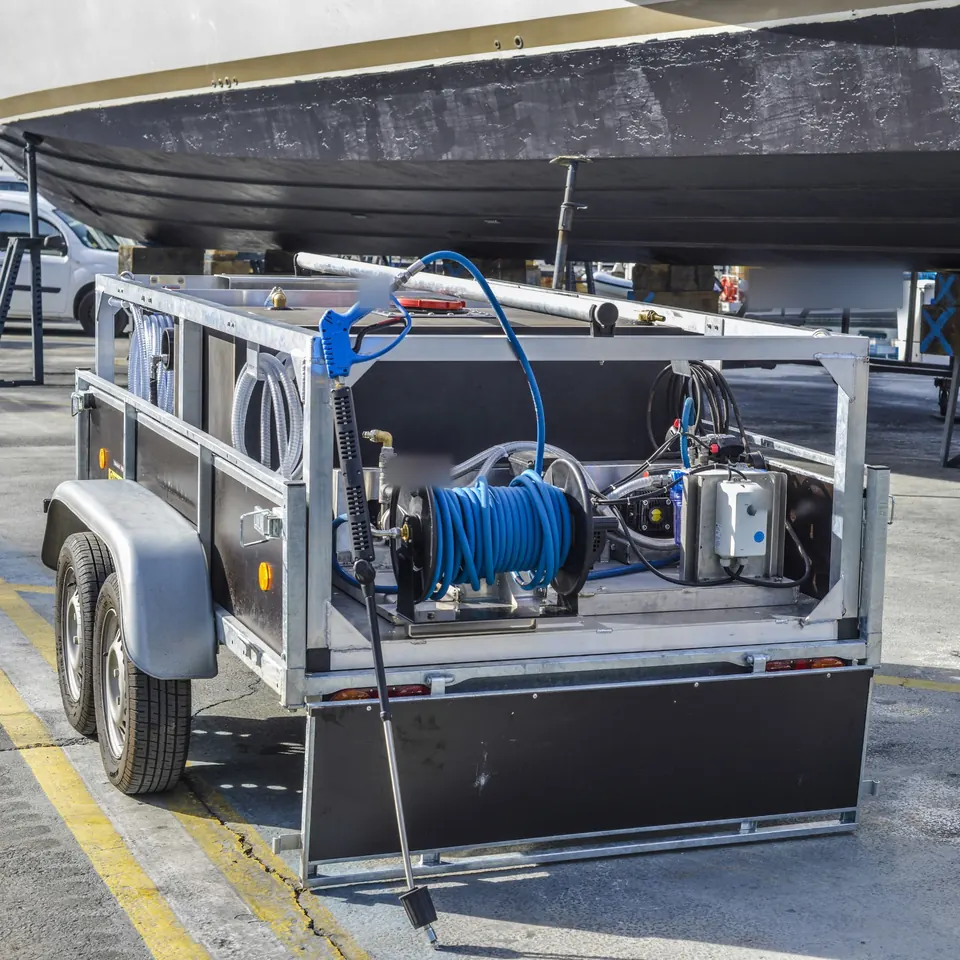
Extended mobile Écostation
To produce and store fresh water, then clean close to the work area with a trailer-mounted unit.
View product details - 04
- 01
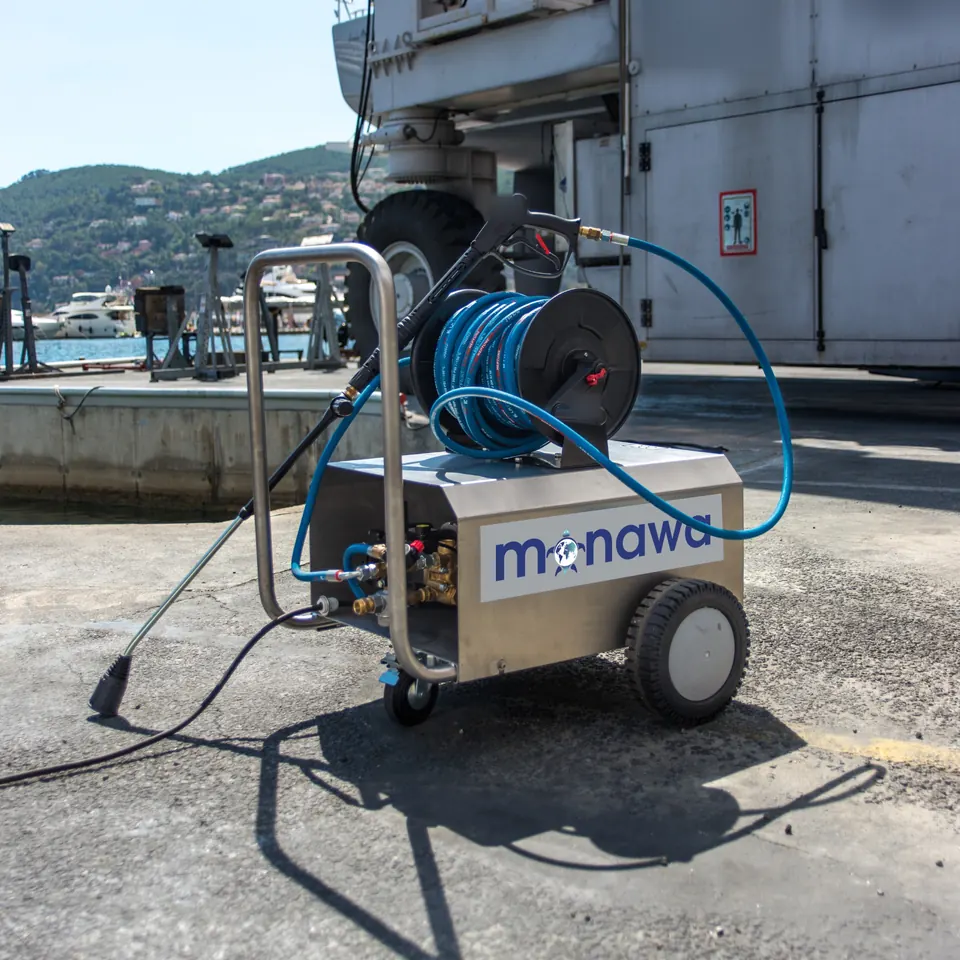
Pressure washer
For on-site washing with seawater or fresh water, in electric or engine-driven versions.
View product details


Produce and use water with complementary equipment.
High-pressure washing
The pressure washer complements the range for washing tasks, but does not desalinate water. Its supply must be chosen to suit the version and intended use. Match it to the water source available on your site and the cleaning tasks you want to carry out.
Storage between uses
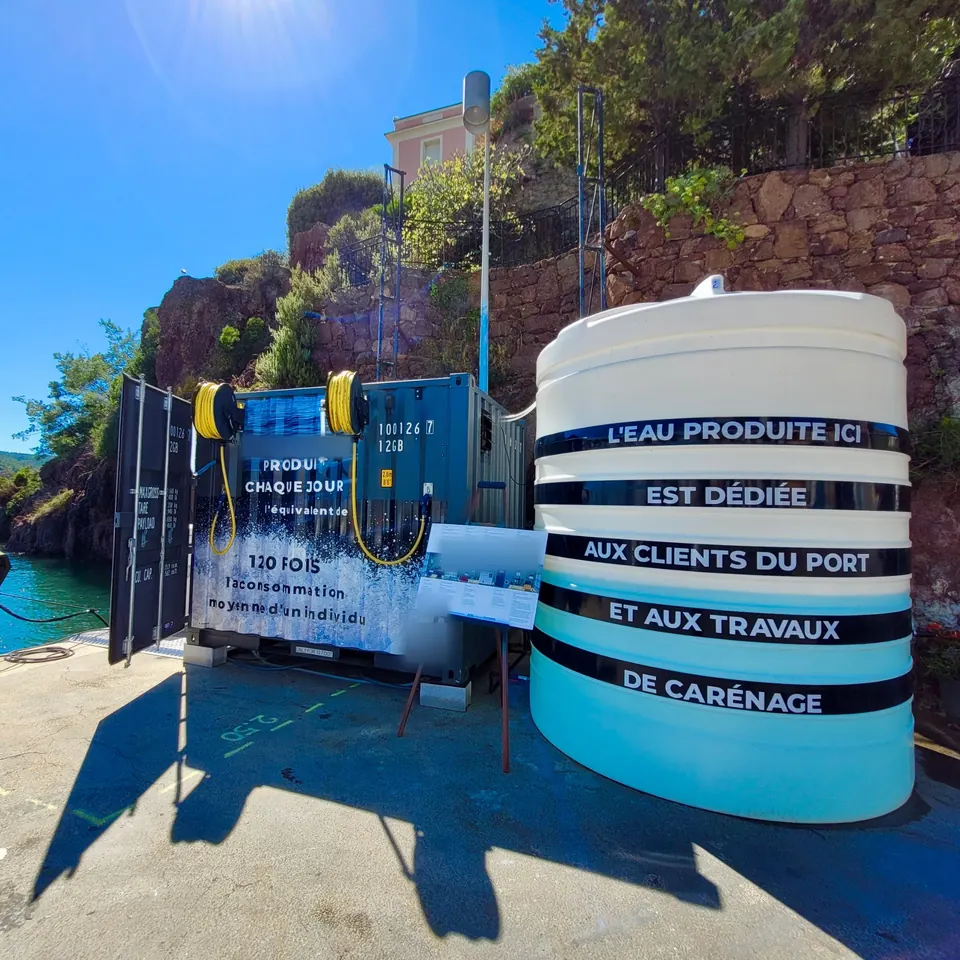
Where consumption and production do not coincide, storage can be considered. The water storage range covers this complementary function. The aim is to configure a water system suited to the site, with clearly separated uses and equipment accessible for operation.
Describe your installation and its operating constraints.
Tell us the project location, your activity, intended uses and existing equipment. Include any known constraints on power, access and the location of water production. You can also specify shutdown periods or variations in activity to prepare for a discussion about maintenance.
If your project responds to a period of water restrictions, have the current local rules checked. Production equipment does not exempt an activity from applicable restrictions. The proposal must be assessed in the context of the site, its technical constraints and any permissions required.
Your questions, our answers.
Can an Écostation operate without storage?
The set-up depends on how production matches consumption. Storage may be useful where demand is concentrated; it is sized for the project.
Does the pressure washer produce fresh water?
No. It uses a water supply compatible with its version. Desalination is a separate function provided by the relevant Écostations.
Should I choose the largest unit?
Capacity is only one criterion. Movement, connections, space and operating conditions must also guide the choice.
Where can I see the equipment in use?
The MONAWA demonstration page brings together the available videos. You can then specify in your enquiry which operations you would like to discuss.
One drop, three areas of expertise, one group.
 Complementary marine expertiseVisit website
 Onboard services | Collection | Waste managementVisit website
 Prevention | Response | Operational controlVisit website